Unreal Engine 5.8.3, what 5.8 changes for TDs, and the road to UE6
What UE 5.8 and its hotfixes change for TDs: PCG, Python, USD, Movie Render Graph, the MCP plugin, Sandboxes, and the UE6 timeline.
Unreal Engine 5.8 has been out for three months, and the third hotfix landed this week. It is also the release most studios will live on for a while: Epic's launch post describes it as the last planned major UE5 release. Here is what matters if you build tools and pipelines rather than games.
Where the engine is today
Epic announced UE 5.8 on the forums on June 17, 2026. Three hotfixes have followed:
- 5.8.1 (July 28, 2026), with "over 260 fixes and updates". One of them fixes MaterialX primvar baking when importing referenced MaterialX materials through Interchange USD.
- 5.8.2 (August 25, 2026).
- 5.8.3 (September 22, 2026). It includes two PCG fixes: integer attribute drift when interpolating metadata (spline sampling, for example) and the Polygon Operation node losing a Data domain attribute value.
In the 5.8 launch post (June 23, 2026), Epic says it will keep supporting UE5 for bug fixes and regressions and "may add another official release if circumstances warrant it". The State of Unreal roundup (June 17, 2026) says the same: Epic is "reserving the option to release a 5.9, if needed".
Why it matters: if you are choosing a version to lock a show or project to, 5.8.x is the line that will keep getting fixes. Plan tools against 5.8 and don't wait for a 5.9.
Python and editor scripting
The UE 5.8 release notes have several items for people who script the editor:
- PCG Python Data Processor node. A new PCG node "to allow python scripting with access to incoming PCG Data and assigning output data".
- Blueprint graph scripting. The Blueprint editor scripting API "has been greatly expanded". Graph editing goes through the new
unreal.BlueprintGraphEditor, and general Blueprint editing through new functions inunreal.BlueprintEditorLibrary. - Batch processing. A batch processor framework for running a function over large sets of assets across multiple workers, which can be started from script with
BatchProcessLibrary::RunBatch. - Optional properties. Python can now read and write Optional properties on UObjects and UStructs, with
Nonemeaning unset.
Why it matters: generating or repairing Blueprint graphs from a script now has a documented API to build on. The PCG node lets existing Python logic work on PCG data inside a graph. The batch processor suits whole-project passes, such as validating or exporting every asset of a type, that would be slow to run one asset at a time.
PCG, USD and rendering
The same release notes list non-destructive manual editing of PCG output, which lets artists adjust a generated result without breaking the procedural setup. They also list complex attribute types (arrays, structures, sets and maps) and embedded subgraphs.
For USD, the notes say support through Interchange "is considered production ready for asset import and experimental for level import". A new experimental USD Pregen framework tracks the relationships between referenced USD files and the Unreal assets made from them. Epic says the current import processes compositions in isolation, which flattens imports and duplicates asset data.
Movie Render Graph is now Production Ready. Among other changes, it can isolate lights so you can render shots with different light property values.
Why it matters: if you have been waiting for Movie Render Graph to settle before moving render farm submission off the legacy presets, it is now marked Production Ready. USD Pregen is experimental, but it targets a common complaint about USD in Unreal: the same referenced asset imported many times over.
MCP and Sandboxes
5.8 ships an experimental Model Context Protocol (MCP) plugin. The launch post says it lets LLM systems connect to the engine and your project, with "built-in exposure to many core systems, including Blueprints, assets, levels, materials, meshes", and that developers can extend it. Epic's Unreal MCP page covers setup.
Sandboxes, also experimental, give you an isolated workspace inside a project. You can keep only the changes you want and export a sandbox to share with a teammate.
Why it matters: both are experimental, so don't build production on them yet. Sandboxes suit look-dev and tool testing, where you want to try something without making a side branch or a WIP folder.
Looking further ahead: UE6 and Lore
At State of Unreal (June 17, 2026), Epic said it is "targeting an Early Access release at the end of 2027" for Unreal Engine 6. It also said it is moving the gameplay programming model to Verse. The same post announced Lore, an open-source version control system for both code and large binary assets, which Epic says is "available today and free to use".
Why it matters: UE6 early access is over a year away, so it should not change this year's tooling plans. Lore is worth watching if your studio has a mix of code and heavy binary assets in version control.
Sources
- Unreal Engine 5.8 Released (forum announcement, June 17, 2026)
- Unreal Engine 5.8 is now available (Epic, June 23, 2026)
- Unreal Engine 5.8 Release Notes
- 5.8.1 Hotfix Released (July 28, 2026)
- 5.8.2 Hotfix Released (August 25, 2026)
- 5.8.3 Hotfix Released (September 22, 2026)
- State of Unreal 2026: Top news from the show (Epic, June 17, 2026)
- Unreal MCP in Unreal Editor
Related
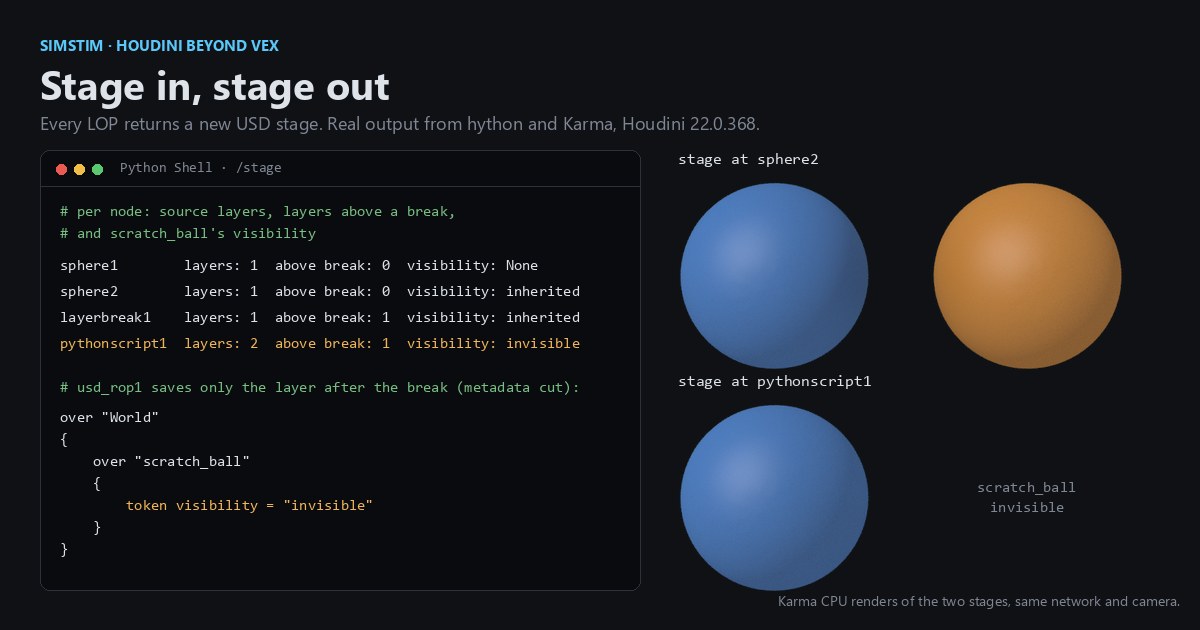 HoudiniStage in, stage out: Houdini's Solaris treats every node as a function over a USD sceneIn Houdini's Solaris, every LOP node takes a composed USD stage and returns one, and its edits land in one in-memory layer at the top. A 31-line usd-core model of that contract, the Python LOP that does it for real, the same network checked in Houdini 22, and why a Layer Break decides what gets saved.
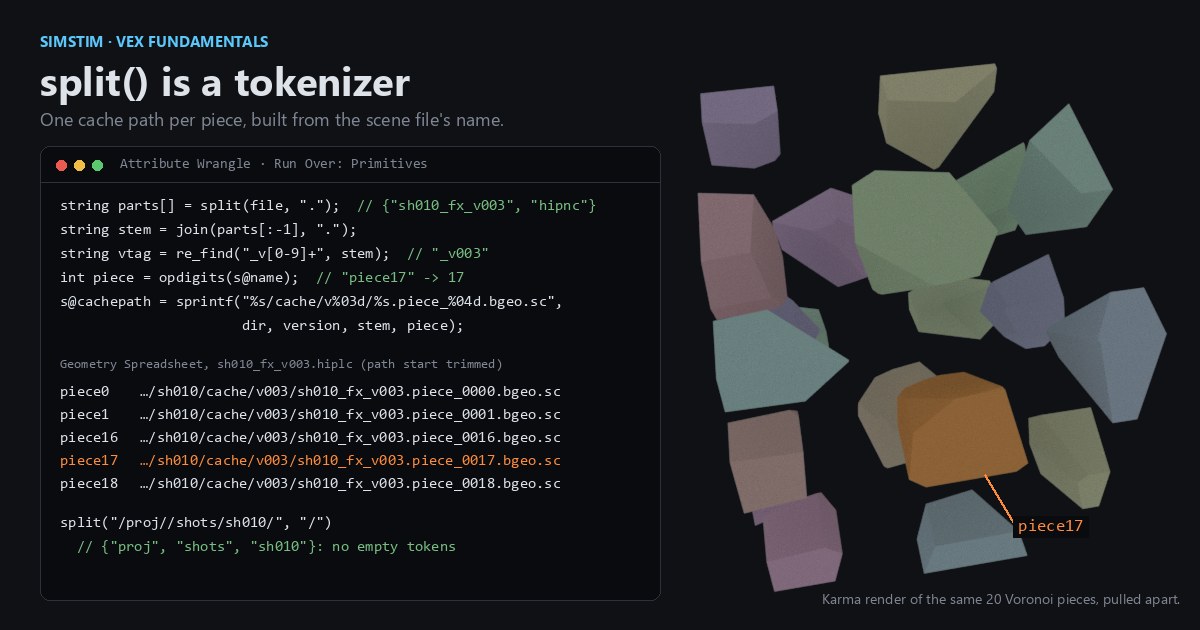 Houdinisplit() is a tokenizer: building cache paths from strings in Houdini VEXVEX strings look like Python's, but split() merges separators and drops empty fields, len() counts bytes, and a wrangle expands $ before the compiler sees it. A per-piece cache path built from the scene file name, and the traps along the way, checked in Houdini 22.
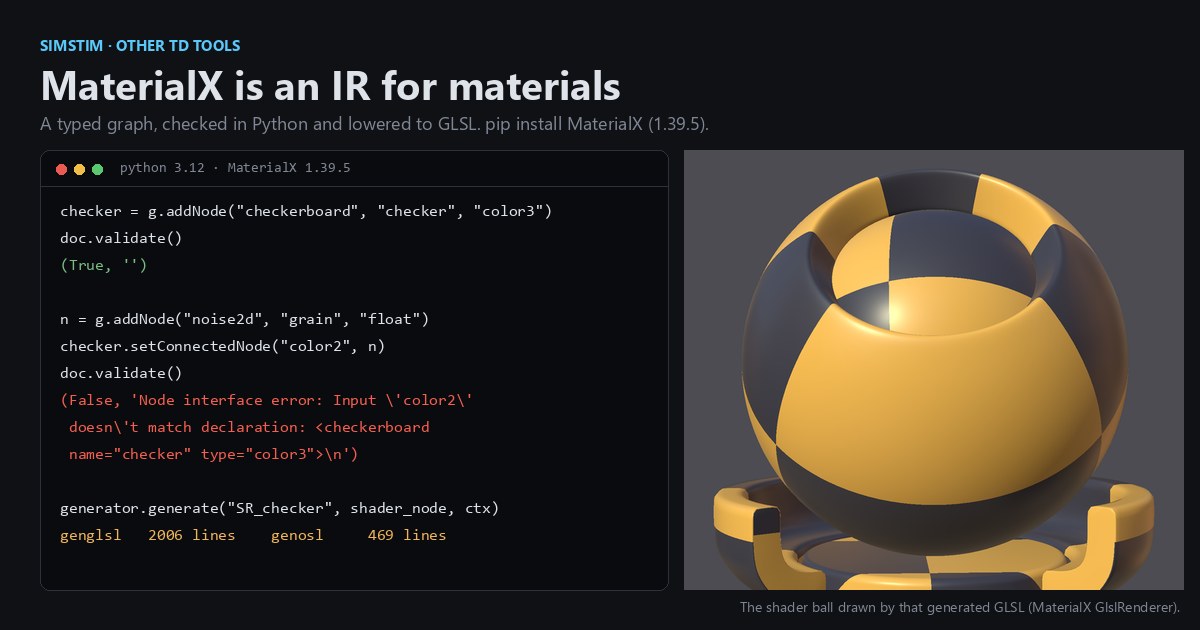 LatestMaterialX is an IR for materials: build a typed shader graph in Python, then lower it to GLSL and OSLA MaterialX material is a typed dataflow graph stored as XML, which a library type-checks and compiles to several shading languages. With only pip install MaterialX, build a checkerboard material in Python, watch the validator reject a float wired into a color, and generate GLSL and OSL from the same file.